 Alp Imamoglu
To improve a workflow, first make the waiting visible
A deadline tells you when work should finish. It does not tell you what is holding it up, who needs to act or which decision comes next.
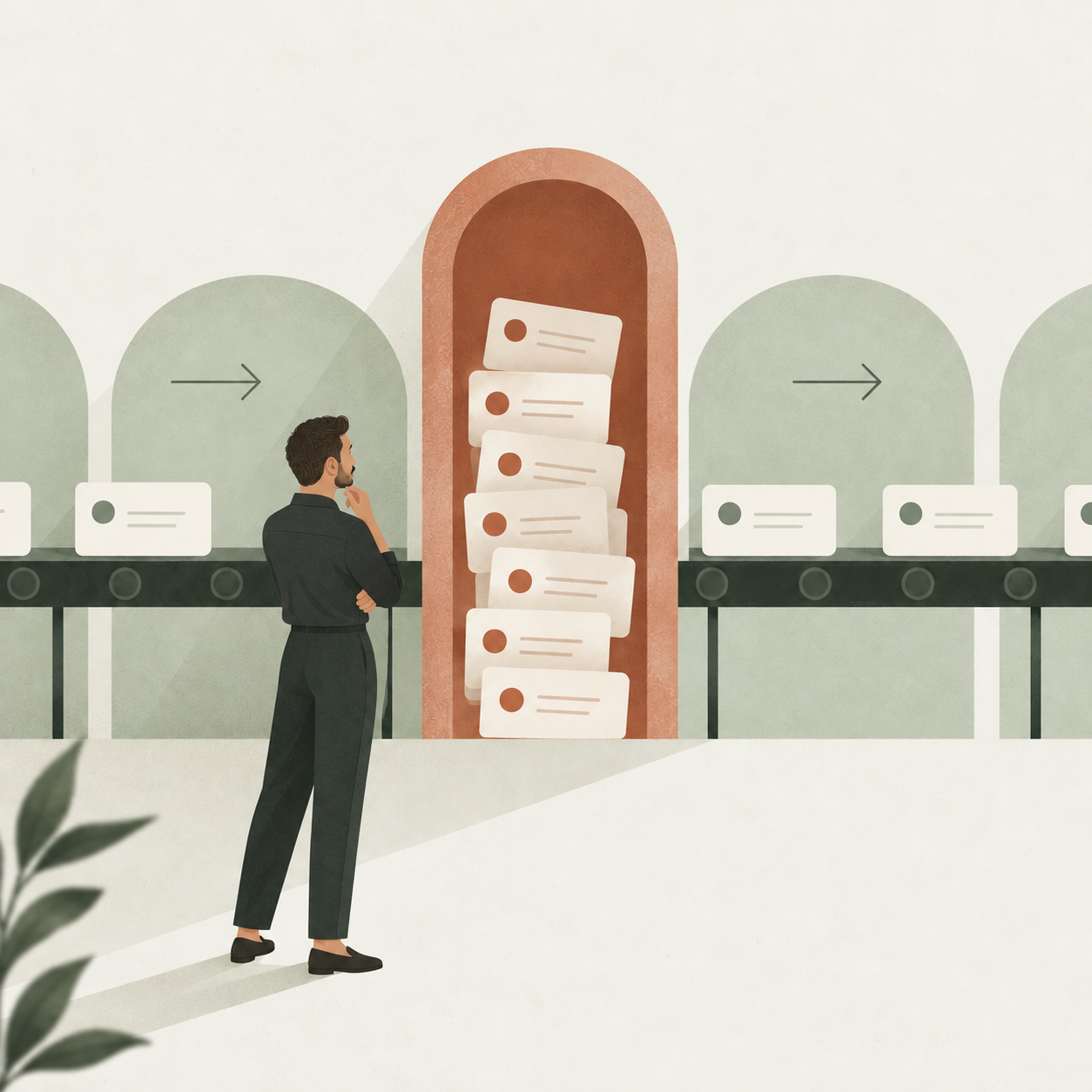
When finding the status of one piece of work means messaging three people, I would look at the information flow before adding another meeting. The facts may be scattered across different places. Several people may be involved without anyone clearly owning the next step. A task may appear active while it is actually waiting for a decision.
This is where I start when developing a workflow tool: What is the work waiting for, and what needs to happen next?
“In progress” leaves too much unanswered
Consider an illustrative delivery scenario. An order is marked “in progress.” A supplier says the component is ready. Operations is waiting for an inspection report. The person speaking to the customer does not know which date they can confidently share.
Each person may have accurate information. The handover between them is still unclear. I would rather see a record that says:
Waiting for the inspection report. The supplier coordinator is following up. If it has not arrived by noon tomorrow, the team will review the alternative delivery plan. The customer date will be updated after the report is accepted.
This is an example, not a real customer record. What makes it useful is that it identifies the owner, the missing information and the next decision together.
What I want a record to explain
First, what happened? A short description of the problem or request gives the rest of the record a purpose. Next, what does it affect: delivery, cost, customer communication or another team’s work?
Then I want to clarify ownership. Listing everyone involved is not the same as naming the person who will follow the work through. Other people may contribute, but someone should know they are responsible for bringing an unresolved issue back into the conversation.
The next action should be specific. Instead of “check,” the record can say which information is needed and who will provide it. A review time, separate from the final deadline, creates an opportunity to revisit the issue before it grows.
Finally, what makes the work complete? Someone having looked at an issue is different from the required outcome being accepted. An approved report, an accepted deliverable or a verified correction can make that distinction clear.
I would not make every field compulsory for every task. Turning simple work into a long form creates its own burden. My starting point is the questions people repeatedly ask because the current process does not answer them clearly.
Transparency should help people, not monitor every movement
I am not interested in creating a screen that records everything employees do. I want to make the work understandable. Why are we waiting? Whose decision is needed? Which information is missing? What can move forward in the meantime?
That distinction affects the design. Instead of demanding constant updates, I want the tool to be useful at the moments when someone makes a decision or hands work over.
Priority also needs context. A late task that changes a customer commitment deserves different attention from a late internal task that is not blocking anything else. A record should show the consequence of a delay, not only its date.
Where I would begin
I would start with a contained workflow rather than introduce a new system across an entire company. Supplier follow-up, customer-request handover or a shift handover could be useful starting points.
First, understand how the process works today. Then test a small version of the proposed tool with the people who will use it. The useful question is whether the team needs fewer clarification messages to move the work forward.
For a pilot, I would suggest tracking time to assign an owner, unresolved handovers and repeated requests for the same update. Those are proposed measures, not results I claim to have achieved with these prototypes.
For me, a useful process tool is not one that displays more information. It is one that makes the next action easier to find.
Your experience: Which question do you hear most often at work: “Who owns this?”, “When will it be ready?” or “What are we waiting for?”
What do you think?
Share an experience, ask a question or suggest another approach. I welcome respectful comments that stay on topic. Comment guidelines
No comments have been published yet. You are welcome to start the discussion.
Join the conversation.
Create a profile or sign in to comment. You do not need an account to read the articles.